
Loading
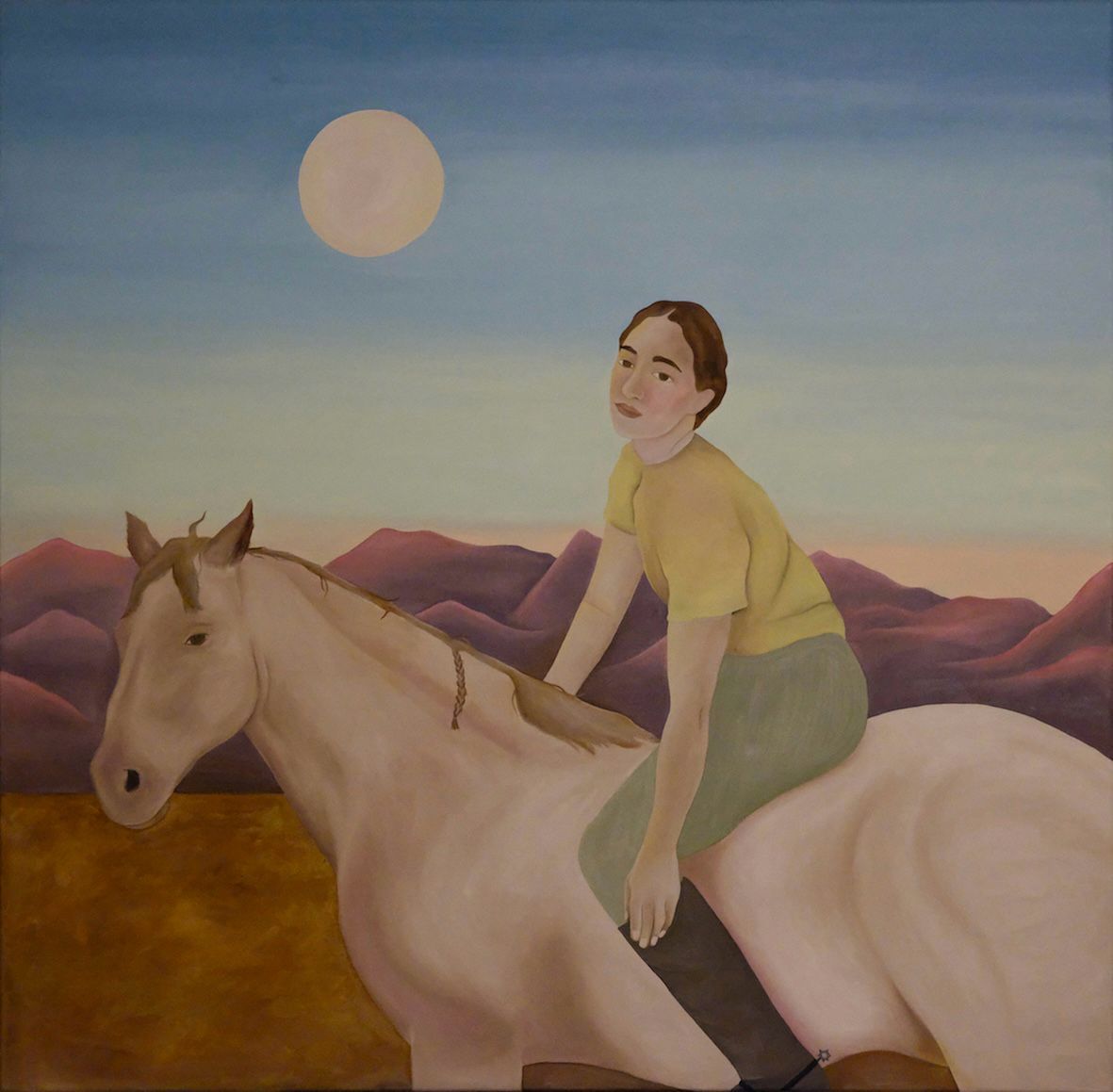
Her works are infused with a captivating balance of such seeming dualities: simplicity and intricacy, distance and closeness, stillness and transience. The result is an oeuvre that is simultaneously personal and impersonal, as well as biographical and universal. The network of subtle polarities present in her paintings leaves the viewer in a state of limbo, inviting them to see the world through her eyes yet make of it what they want.
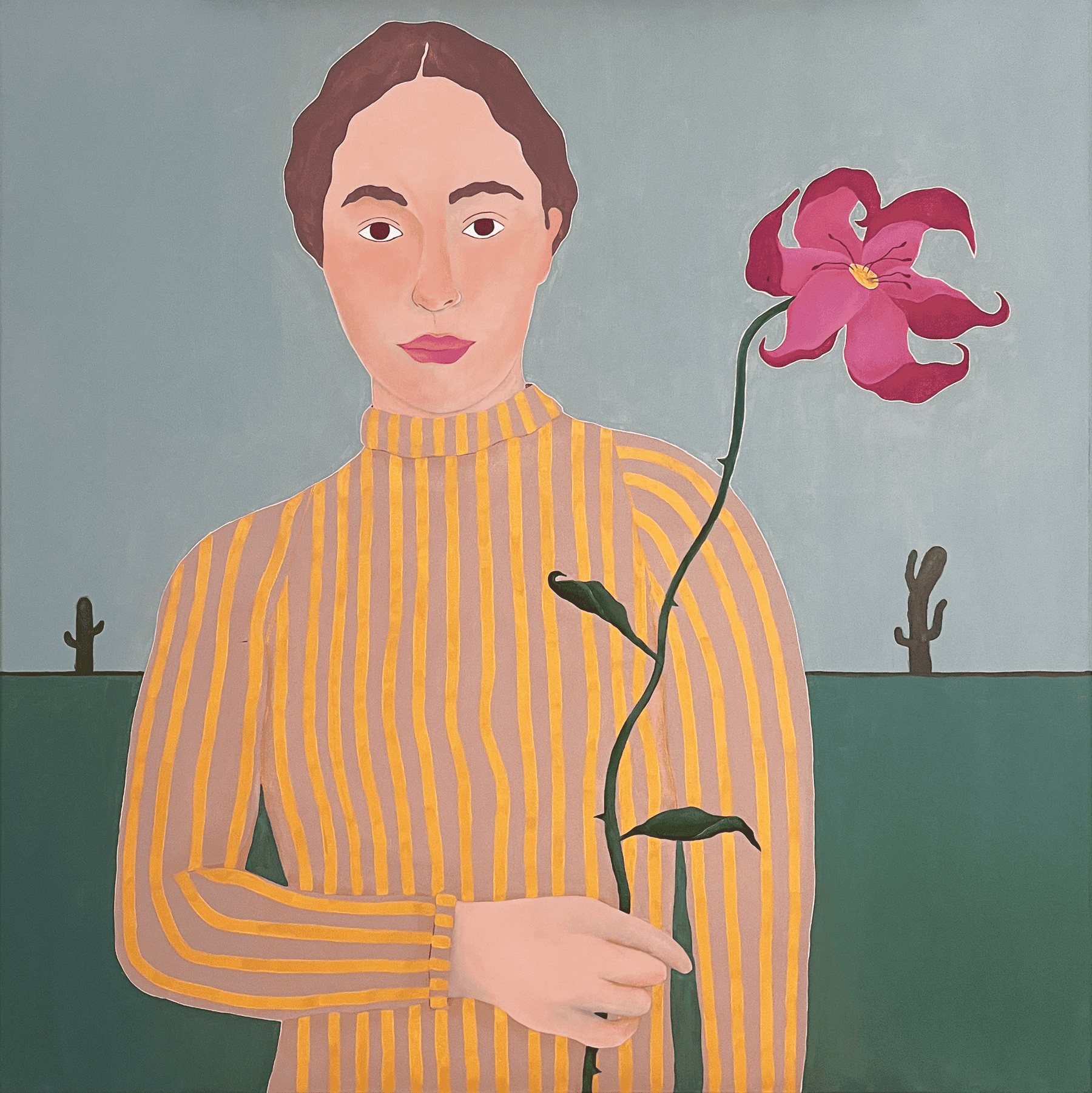
Baussan’s subjects—most of which are women—seem to exist without much context. While not all of them, many find themselves in vast landscapes that are delicately reduced to vibrant color fields. Their features, too, are stripped of all but the most vital details. This deceptively straightforward use of color and line, coupled with the distinctive singular perspective in which they are represented, serves as the perfect pretext to lure the viewer into her world. One where subjects are suspended in time if not removed from it altogether.
Born to a Salvadorean mother and a Haitian father, Baussan grew up in France, far from her—or her parents’—motherland. Her multicultural upbringing translated into a fluid sense of origin and home. For Baussan, identity was, to an extent, conditional on geographical setting, always susceptible to shifts across borders. This socio-ethnical in-betweenness, so formative during her childhood, is a quality that Baussan’s paintings intend to redefine by honoring all the influences that have shaped her. Although not immediately apparent, her practice centers on reconciling her present self—and the mundane experiences that encompass it—with her own multiplicity over her lifetime.
Baussan’s figures tend to repose with an otherworldly stillness, staring at the viewer with an air of detachment. While they appear in somewhat reserved postures, it is their eyes—paradoxically the attributes with the most details pared away—that imbue the frame with a sense of reticence. But rather than pushing the viewer away, this restraint awakens an inescapable curiosity that feels intimate and relatable. The striking contrast between the subjects’ ambivalence and the lively colors asks the viewer to bridge the gaps, observe, and succumb to her world by means of contemplation. Although seemingly quiet, Baussan’s women demand attention. Their stories, however, operate at the level of emotion. They are as much about what’s captured in the canvas as what remains out of sight.
Given her preoccupation with the world around her—and presenting it up close—it is perhaps no surprise that daily observations, memories, personal photographs, and journal entries serve as the point of departure for Baussan’s art. Yet her scenes, like her subjects, do not have a clear referent. Instead, Baussan merges her source materials, assembling symbols, palettes, and motifs through an imaginary web of associations. A snail can trace back to a distant memory of watching the mollusks gather on the walls of her home in France, while the hues of a landscape can touch on a deeply felt loss. For her, these are not strictly self-portraits but rather collections of people, places, and their affect. Figures, sites, and influences that seem removed from one another, and which suddenly concur with each other as she paints.
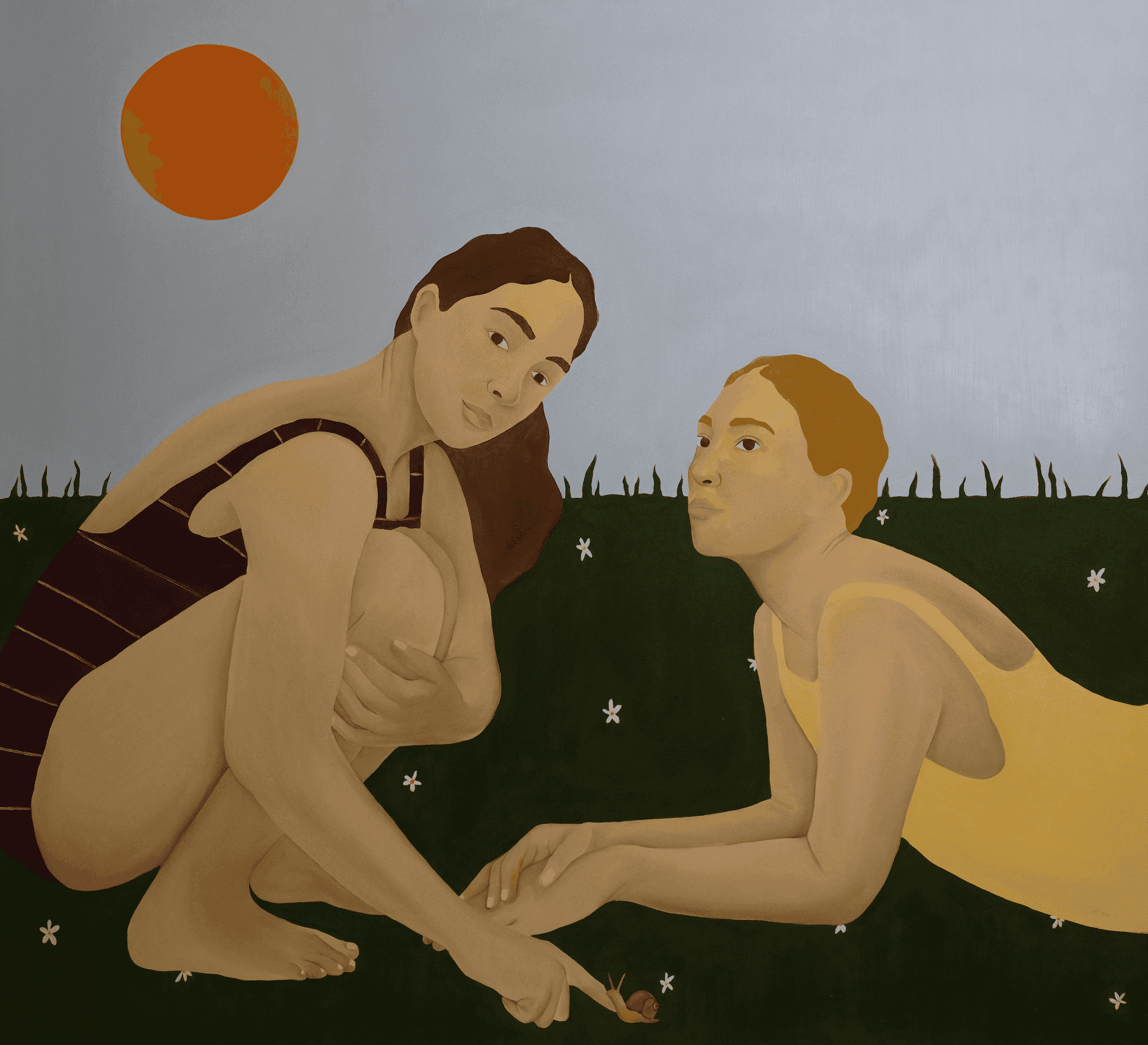
Through Baussan’s eyes, ordinary encounters become gently more stimulating, more magical. Her work attests to the realization that in-betweenness has a liberating power when approached as a state of balance rather than tension. By painting, Baussan transforms an apparent source of alienation into an opportunity for redefining home as eloquently multifaceted, where seemingly contradicting aspects of identity and roots are not mutually exclusive. Every brush stroke is an ongoing exploration of a moment and feeling that has marked her, as well as an examination of why some of these are more easily retrieved than others. Her art is an ingeniously nuanced response to the questions she has long pondered, questions about the world she carries within, about who and what—more so than where—is her home.
Continue exploring
© 2026 Catalysta